Tuesday, October 16, 2018

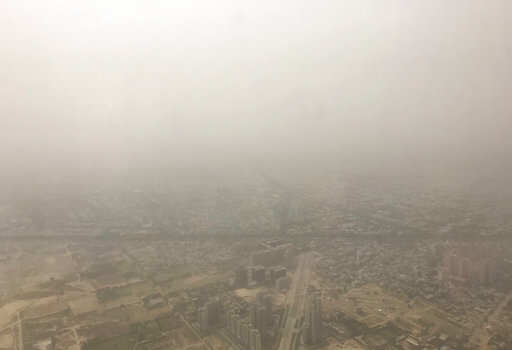
Roots of pollution in urban areas in India

There are myriad reasons for different types of pollution in urban areas. But all the reasons are ultimately derived from one major cause. It's "Human behavior".

We all talk so many things about prevention of pollution but are we really implement those things in our routine lives?? People have tendency to talk many such things but they are the culprits to contribute the cause.
Pollution wodrd itself is invented because of human behavior to neglect the nature. We run after the things which can reduce our work but they are harmful to the environment. We all know this but we cannot prevent ourselves to harm the nature.
Hopefully in foreseeable future people will understand this implement their thoughts in actions.

Saturday, July 7, 2018

Ways to Prevent and Control Land Pollution

Land pollution has a very negative impact on the health of plants, humans and animals. Here are 15 ways to prevent and control land pollution.
1. Go organic: organic farming uses no chemical fertilizers or insecticides.
2. Fewer plastics: cut down on packaging.
3. Agricultural management: prevent pesticides from leaching into rivers.
4. Reduce sprays: chemical sprays dissolve into rain which falls on and pollutes the land.
5. Don’t litter: clear up all your litter.
6. Careful about what you pour down the sink: contaminated water can pollute the land.
7. Reforest: forests maintain the right chemical balance of the land.
8. Tread lightly: leave some areas of land unspoilt my humans.
9. Volunteer: pick up litter, work on reforestation projects or whatever appeals to you.
10. Educate: teach future generations about land pollution.
11. Get authorities involved: get the weight of local government behind you.

Thursday, July 5, 2018

Nine Things You Can Do To Reduce Water Pollution


“Just because it disappears, doesn’t mean it goes away”

  1. DO NOT pour fat from cooking or any other type of fat, oil, or grease down the sink. Keep a “fat jar” under the sink to collect the fat and discard in the solid waste when full.
  2. DO NOT dispose of household chemicals or cleaning agents down the sink or toilet. Simsbury has a Hazardous Waste Collection day usually from 8:00am to 1:00pm at Henry James School. Connecticut Resource Recovery Authority lists all collection dates.
  3. DO NOT flush pills, liquid or powder medications or drugs down the toilet. For recommendations on proper disposal for all types of medical wastes, visit the CT DEP publication here.
  4. Avoid using the toilet as a wastebasket. Most tissues, wrappers, dust cloths, and other paper goods should be properly discarded in a wastebasket. The fiber reinforced cleaning products that have become popular should never be discarded in the toilet.
  5. Avoid using a garbage disposal. Keep solid wastes solid. Make a compost pile from vegetable scraps.
  6. Install a water efficient toilet. In the meantime, put a brick or 1/2 gal container in the standard toilet tank to reduce water use per flush.
  7. Run the dishwasher or clothes washer only when you have a full load. This conserves electricity and water.
  8. Use the minimum amount of detergent and/or bleach when you are washing clothes or dishes. Use only phosphate free soaps and detergents.
  9. Minimize the use of pesticides, herbicides, fertilizers. DO NOT dispose of these chemicals, motor oil, or other automotive fluids into the sanitary sewer or storm sewer systems. Both of them end at the river.
Reference: https://www.simsbury-ct.gov/water-pollution-control/pages/ten-things-you-can-do-to-reduce-water-pollution

Wednesday, July 4, 2018

Super Easy Ways To Stop Air Pollution


The air that we breathe today is full of toxic and hazardous pollutants. Pollution in the environment could leave mother Earth sapped of its beauty and biodiversity. Each year millions of people die all around the world due to different pollution related problems. The key to live a healthy life is to identify the sources of air pollution and implement practical ways so that you can help stop air pollution.
If you have been looking to get in on the whole environmental movement, then you’ve likely been trying to look at the various options that you have when it comes to preventing pollution problems from becoming a bigger issue. In this article, we’re going to give you 41 different ideas that you can try out for yourself so that you can contribute to stopping air pollution in your area and in the world around you.
1. Use Public Transportation: Use your vehicle a lot less often. Carpool and rideshare when you have the ability to do so and consider using public transportation instead of walking; that way, you aren’t contributing to all of the issues that the air is already dealing with before adding your car to the mix.
2. Drive Smart: If you are driving on a regular basis, make sure that you are driving smart instead of wasting gas. Drive within the speed limit, make sure that there aren’t a lot of things in your car that will weigh it down, and do all that you can to conserve the amount of gas that you will be using on a regular basis.
3. Do Regular Car Check Up: Its important for you to go for regular check up of your car to make sure it does not consume extra fuel. This will not only save you money but your car will also last longer.
4. Keep Car Tires Properly Inflated: Car consume more fuel when tires are not properly inflated and aligned. Keeping them properly inflated will lessen your impact on the environment.
5. Buy Energy Efficient Vehicles: Buy vehicles and other items that are helpful to the environment. There are so many options that you have now that are either efficient on gas or they are hybrids, so you don’t have to worry about them putting additional gas and pollution into the atmosphere. If you’re looking for a new car, go energy efficient if you can.
6. Consider “going green”: There are so many options for going green out there and a lot of them come with tax breaks that can make it even easier for you to do so. Look into your local, state, and even federal initiatives in order to see if they have something that can help you change your tune.
7. Plant a Garden: Plant a garden that is going to give the air the nutrients that it needs to be cleaner. There are so many plants out there that will eat up the junk in the atmosphere. Do your research and see what one(s) you can grow easily and that will help the world around you.
8. Use Low-VOC or Water-based Paints: Use paints that are based with water and not oil. The less oil products that you are using, the better off that you’re going to be because that means less oil is being produced overall.
9. Turn Off Lights When not in Use: Don’t keep the lights or other electric devices on. The more traditional power that you are using, the more energy you’re wasting and the more that you’re polluting the air.
10. Buy Green Electricity: Buy electricity generated from renewable energies i.e. hydroelectric, wind or solar power.
11. Make use of Solar Energy: Consider using solar power instead of regular power. Solar power can save a ton of energy for you and, on top of that, it could also end up saving you a lot of cash in the long run as well.
12. Use Natural Gas Instead of Charcoal: Use a propane or natural gas grill instead of charcoal. Then, you’re not putting fossil fuels into the air, which can be incredibly detrimental to the world around you.
13. Use a EPA Certified Woodstove: Use a EPA certified woodstove or fireplace instead of oil. Once again, the less oil you use, the better it is for the atmosphere.
14. Dry Clothes on Clothesline: Dry your clothes on a clothesline instead of trying to dry your clothes in a dryer. The less energy that you use, the better off it will be.
15. Always Use Recyclable Products: Always use recyclable products if you have access to them and the ability to choose them. They take less power to make than other products.
16. Use Both Sides of Paper: Use both sides of a piece of paper. Otherwise, you’re just being wasteful with the things that you are using.
17. Reuse Paper Bags: Reuse paper bags; they work really well for almost anything you can imagine and they are recycled in the first place.
18. Avoid Plastic Bags: They are made from oil products and they can hurt the environment because it takes them forever to decompose (and some never decompose).
19. Choose Products With Minimal Packaging: When it comes to buying items from outside, consider buying those with minimal packaging and are reusable. Even if they are packaged, try to buy the one with least packaging.
20. Use Broom Instead of Leaf Blower: Don’t use items that are going to kick up a lot of dust into the air; consider using other items instead. For example, instead of using a leaf blower, why not consider using a broom instead?
21. Don’t Use Hazardous Chemicals: If you’re using materials that have a lot of chemicals and smell strongly, consider using them outside and/or not using them at all.
22. Quit Smoking: Quit smoking and encourage those around you to do the same. The smoke is terrible for you and for the air quality around you as well.
23. Insulate the Leakages: Utilize insulation in and around your home in order to make it so that you don’t have to use as much energy in order to heat your home.
24. Consolidate Your Trips: Try to make sure that everything that you’re doing can be done in one trip instead of going out several times in your vehicle. That way, you’re using less gas while you’re out and about.
25. Get an Energy Audit Done: Get an energy audit on your home that is related to energy efficiency, and ask the auditor about changes that you can make in order to ensure that your home is as energy efficient as possible. They can give you recommendations that will help you out and even save you money in the long run.
26. Use Surge Protectors: Use surge protectors if you have areas that are going to use a number of different appliances and then, if you can, make sure that you turn it off when you aren’t using anything on the surge protector. This saves energy and the items that you have plugged in as well.
27. Use Fan Instead of AC: If it isn’t incredibly hot outside, you may want to consider using a fan instead of air conditioning if you can. It takes a lot less power and energy to take care of it.
28. Use Blankets When it is Cold Outside: On the other side of that coin, if it isn’t exceptionally cold, consider just putting a blanket or extra layers on to take the chill off instead of wasting heat.
29. Reduce, Reuse, Recycle: Recycle as much as you can so that it can be reused later on in other products. That way, you aren’t adding to the problem by adding additional products to the mix of what is going on.
30. Buy Items Made From Recycled Materials: If possible, purchase items made up from recycled materials rather than buying fresh products. This will reduce the need to buy new raw materials to produce fresh items. When you are on a shopping spree, look for items having a recycle logo or are at-least made from recyclable content.
31. Cut Down on Junk Mail: If you’ve been receiving a lot of junk mail every week, its time for you to avail services of various such companies that can help you to get rid of these mails in your mailbox and save millions of trees that are being axed worldwide to produce paper.
32. Buy Rechargeable Batteries: Every year billions of batteries are sold and then disposed off after use. Buy a charger and few sets of rechargeable batteries and that should pay off in no time.
33. Buy ENERGY STAR Products: Whenever you buy new electronic products for your home or office, always buy ENERGY STAR products. These products have to meet certain requirements for energy savings.
34. Use Cold Water Instead of Hot: It’s better for the environment if you opt to go ahead and use cold water for your laundry instead of hot water, because you aren’t going to have to use your hot water heater, which uses extra fuel and puts it into the environment.
35. Eat Organic Food: Eat things that are made locally, like vegetables and meats. That means that they don’t have to get transported as far to get to you (on top of that, it’s also making a big difference for your local economy as well, which can help you even more in the long run).
36: Grown Your Own Fruits and Vegetables: If you have a lawn at your own backyard, consider starting a garden to grow fruits and vegetables. The fruits and vegetables that you buy from the market have had to travel several miles before reaching your plate. So growing then in your home would be a great way to stop air pollution.
37. Ask your Employer For WFH Facility: For a change, ask you employer for work from home facility.  With so many options available for audio and video conferencing, it shouldn’t be difficult for you to carry left over work to home. This will not only help you to reduce you trips to office and save money but also helps you to reduce pollution.
38. Contribute: See if your state or local government already has initiatives that could end up helping you to contribute to making the air quality in and around your area better than it would have been otherwise.
39. Talk to Local Representatives: Talk to your local representatives and government officials about the concerns that you have related to the clean air issues in your community and encourage them to act on it and take care of those issues so that we can leave our world a better place for our children.
40. Educate Your Companions: Let the people around you know about how they can contribute to clean air initiatives and educate them about all of the different ways that they can take care of the environment themselves.
41: Join an Environmental Group: In case you are willing to contribute towards growing pollution in your area, consider joining any environmental group. You can meet people, discuss issues and share ideas on what you can do about it. Spread the work and ask to join in this noble cause.
 Reference: https://www.conserve-energy-future.com/41-super-easy-ways-to-stop-air-pollution.php

Tuesday, July 3, 2018

Delhi's air quality improves to 'moderate' level


New Delhi: Delhi's air quality for the first time recorded a "moderate" level today after remaining in the "severe" category for nearly a week, according to monitoring agencies. 

A thick cloud of dust hangs over New Delhi, India, Saturday, June 16, 2018. New Delhi officials on Thursday night, ordered a two-day halt to construction in an attempt to reduce choking pollution that has cloaked the city in smog and dust. The government's Central Pollution Control Board rated the city's air quality Friday as "severe" the worst possible category for the fourth day in a row.Photo/Yirmiyan Arthur)

The presence of moisture in the air is the main reason for the improvement in the air quality, the System of Air Quality and Weather Forecasting and Research Institute (SAFAR) of the central government said. 

The weather office has forecast the possibility of rain and thunderstorm in the national capital. 

The pollution level had spiked to an alarming "severe" category on Tuesday due to dust storms in western India, particularly Rajasthan, which increased coarser particles in the air. 

According to the data by the Central Pollution Control Board (CPCB), the PM10 level (presence of particles with diameter less than 10 mm) was recorded at 191 in Delhi-NCR and 187 in Delhi today. 

The PM10 level between 0-100 is considered "good", 101-250 "moderate ", 251-350 "poor", 351-430 "very poor" and 431-550 "severe". 

The PM2.5 level (presence of particles with diameter less than 2.5 mm) that deteriorated from "very poor" to "severe", has now come down to "moderate" category. It was 68 in Delhi-NCR and 66 in Delhi today, the CPCB data said. 

Even Anand Vihar, which generally has a very high level of pollution, registered a PM10 grade of 269 and PM 2.5 level of 100, which falls in the 'poor' category. 

"The air quality might come down to even satisfactory level due to rain and thunderstorm," Gufran Beig, a scientist at the SAFAR, said. 

The sudden rise in the air pollution level has brought to light that severe pollution could be a 'summer-time problem' too, according to scientists. UZM SC SC


Monday, July 2, 2018

Pollution Facts


Whether one likes it or not, pollution is one the most ignored concept in the modern world. Here are some shocking facts on pollution which give a quick glance through of how this destroyer is up to creating havoc on the earth.
What is Pollution?
Pollution can be described as contamination of air, water and soil by introduction of a contaminant into a natural environment, usually by humans that are harmful to living organisms. The most common forms of pollution are air pollution, water pollution, agricultural pollution and land pollution.
“contamination of air, water, or soil by substances that are harmful to living organisms. Pollution can occur naturally, for example through volcanic eruptions, or as the result of human activities, such as the spilling of oil or disposal of industrial waste.”

Below are 51 facts on Pollution

Fact 1: Pollution is one of the biggest killers, affecting more than 100 million worldwide.
Fact 2: More than 1 billion people worldwide don’t have access to safe drinking water.
Fact 3: 5000 people die every day as a result of drinking unclean water.
Fact 4: The garbage dumped in the ocean every year is roughly around 14 billion pounds. Plastic is the major constituent.
Fact 5: Pollution kills more than 1 million seabirds and 100 million mammals every year.
Fact 6: People who live in high-density air pollution area, have 20% higher risk of dying from lung cancer, than people living in less polluted areas.
Fact 7: Approximately 46% of the lakes in America are extremely polluted and hence risky for swimming, fishing and aquatic life.
Fact 8: In the great “Smog Disaster“, that happened in London in the year 1952, approximately four thousand people died in a few days due to the high concentrations of pollution.
Fact 9: United States produces 30% of the world’s waste and uses 25 % of the worlds natural resources
Fact 10: The Mississippi River dumps 1.5 million metric tonnes of nitrogen pollution in the Gulf of Mexico every year.
Fact 11: Every year around one trillion gallons of untreated sewage and industrial waste is dumped in the U.S water.
Fact 12: Children contribute to only 10% of the world’s pollution but are prone to 40% of global disease.
Fact 13: More than 3 million kids under the age of 5 years die every year due to environmental factors like pollution.
Fact 14: Composting and recycling alone have prevented 85 million tons of waste to be dumped in 2010.
Fact 15: China is the world’s largest producer of carbon dioxide. United States is number 2.
Fact 16: Almost 80% of urban waste in India is dumped in the river Ganges.
Fact 17: Noise pollution is the most neglected type of pollution.
Fact 18: The amount of money invested in nuclear test could be used to finance 8,000 hand pumps, giving villages across third world access to clean water.
Fact 19: Acidification of the ocean is the worst type of pollution. Oceans are becoming more acidic rue to green house emissions from fossil fuel.
Fact 20: Livestock waste majorly contributes to soil pollution. During monsoon, water runs over the fields carrying dangerous bacteria from the livestock into the streams.
Fact 21: More than 100 pesticides in any medium- air, water or soil can cause birth defects, gene mutation and  cancer.
Fact 22: There are more around 73 various kinds of pesticides in the groundwater, which is used as drinking water.
Fact 23: There are more than 500 million cars in the world and by 2030 the number will rise to 1 billion. This means pollution level will be more than double.
Fact 24: Major oil spills like those in the Gulf of Mexico, is the the worst type of pollution due to consistent oil spills in the water body which spreads everywhere else.
Fact 25: House owners use chemicals that are 10 times more toxic per acre, than the amount used by the farmers.
Fact 26: Around 1000 children die in India every year due to diseases caused from the polluted water.
Fact 27: In India, the Ganges water is gradually becoming septic, especially due to dumping of half burnt dead bodies and enshrouded babies.
Fact 28: 88% of the children in Guiyu, China suffer from various respiratory diseases as the area they live in is a huge e-waste site.
Fact 29: Antarctica is the cleanest place on Earth protected by anti-pollution laws.
Fact 30: Scientific research has proven that carbon dioxide emissions are lowering the pH of the ocean and are acidifying them even more.
Fact 31: A single car generates half a ton of CO2 and a NASA space shuttle releases 28 tons of C02.
Fact 32: Americans buy more than 29 million bottles of water every year. Only 13% of these bottles are recycled every year.
Fact 33: Tsunami in Japan during the year 2011,  has created a debris of 70 miles, which consists of cars, plastic, dead bodies and radioactive waste.
Fact 34: Cadmium is a dangerous pollutant that kills foetus’ sex organ cells. It is wide spread in many things that we eat and drink.
Fact 35: It takes only 5 days for a jet stream in Chine to carry the air pollution to the United States.
Fact 36: Pollution in China can change the weather in United States.
Fact 37: World Health Organization (WHO) estimates 6400 people die every year in Mexico due to air pollution.
Fact 38: A single person in United States produces 2 kilograms of garbage every day.
Fact 39: The UAE is one of the biggest waste producer and water consumer.
Fact 40: Every 1 million ton of oil that is shipped, approximately 1 ton from gets wasted in the form of spills.
Fact 41: Most of the hazardous pollutants that are discharged in the atmosphere each year are released to surface water, ground water, and land, combined.
Fact 42: Approximately 3 billion people without proper shelter and healthcare cook and heat their homes using open fires and leaky stoves, thus contributing more towards pollution and global warming.
Fact 43: Chronic obstructive respiratory disease (COPD) that develop due to indoor air pollution is responsible for the death of more than 1 million people every year.
Fact 44: The people more susceptible to high ozone levels are children, elderly, people with lung disease, and people who are active outdoors.
Fact 45: A glass that is produced from recycled glass instead of raw materials can reduce related air pollution by 20%, and water pollution by 50%.
Fact 46: If you think that you don’t smoke and you will be spared by lung cancer, just remember that your lungs or heart may be similarly damaged simply from exposure to ozone and particulate matter.
Fact 47: Places which are near to high traffic roads, seaports or railyards are dangerous place to live or work as they contain more concentrated levels of air pollution.
Fact 48: In cities, where there is huge traffic and vehicles run bumper-to-bumper, the pollutants in the air can seep into your car making the air you breathe inside your car up to 10 times more polluted than typical city air.
Fact 49: In 1987, the U.S. released 1.2 million tons of toxic chemicals into our atmosphere, 670,000 tons into our soil, and 250,000 tons into our water. (International Wildlife magazine)
Fact 50: In the US, 41% of all insecticides are used on corn. Eighty per cent of these are used to treat a pest that could be controlled simply by rotating the corn for one year with any other crop.
Fact 51: Public transportation and car pooling can help you to reduce air pollution and save money up to a great extent.
If these statistics are enough to give a wake-up call, then even more needs to be done beyond that. Step ahead and stop pollution yourself, today.
Reference: https://www.conserve-energy-future.com/various-pollution-facts.php