Saturday, June 30, 2018

Is quality of air affected by wildfire?


Wildfires have become much more frequent over the last few years and this trend is set to continue even further, the latest study done by the US scientists suggests that by the year 2100, emissions from wildfires in California alone will grow by 19 to 101 percent.
Image result for wildfire


The main reason behind this expected growth of emissions is climate, which is fast changing as our planet becomes hotter due to rapid increase in man-made carbon emissions.

One of the major environmental damages done by more frequent wildfires will be degraded air quality because this will lead to a much higher level of air pollutants in the air leading to adverse effects to human health causing aggravated respiratory conditions.

Climate change is almost certain to impact the number and severity of wildfires, meaning that already concerning air pollution issue will likely grow even further in not so distant future. The science still hasn't proposed the way on which people can better prepare for the future and perhaps lessen the effects of these wildfires.

It's not just air pollution that is worrying scientists but also risk of damage to buildings and homes in hot areas such as American West. People will quickly need to learn how to mitigate these effects in wildfire-prone regions in order to protect their homes and their health.

Air pollution coming from wildfires is not just major health issue, it will also likely lead to lower crop yield, and forest health could suffer, doing damage to many ecosystems that depend on forests.


Thursday, June 28, 2018

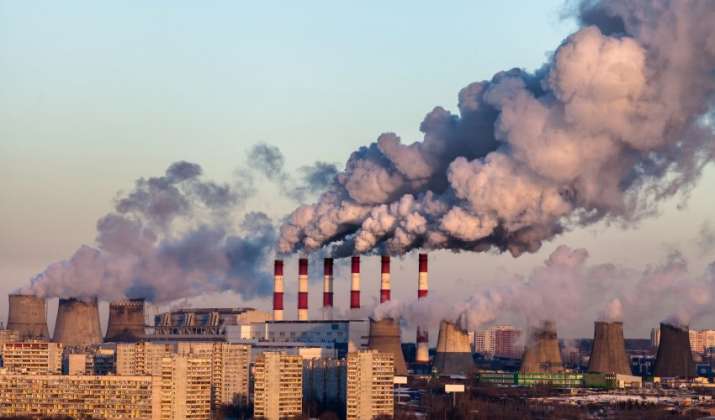
Air pollution has major impact on global weather

Air pollution caused by humans is not only causing health and environmental issues, it is also affecting global weather. The researchers at the Texas A&M University have recently found the clear link between the increased air pollution, and changing weather patterns, particularly on the formation of powerful storms.
Image result for air pollution
In their study, researchers used pollution emission data compiled by the Intergovernmental Panel on Climate Change and looked at two scenarios, the first one for a rate in 1850, the so called pre-Industrial era, and the second one from 2000. By comparing these two scenarios researchers discovered that air pollutants from Asia affect storms that hover over the Pacific and subsequently the weather patterns in North America as well as the rest of the world.

The ever-increasing air pollution in many of the Asian fast-growing economies has major impact on storm formation and global air circulation. It makes storms stronger and more intense, and these storms are then characterized with more precipitation in them.

The pollutants that come in the air form particles called aerosols. The level of these particles in the atmosphere affects the scattering or absorbing solar radiation, and can thus indirectly lead to alteration of cloud formations.

The researchers are convinced that the Pacific storm track is intensified because of the growing Asian air pollution. Aerosols in the air over Asia impact the global weather patterns through these powerful Pacific storms can affect weather significantly, both at regional as well as global level.

Hopefully, future studies will shed even more light on the link between air pollution and climate and weather patterns.

Wednesday, June 27, 2018

New filtration membranes for cleaner industrial water

Many industries need plenty of water for different processes. The water used for these processes compounds of different metals and minerals, meaning that this is not clean water that can be used for drinking.

The scientists from all over the globe are working on potential solutions that could effectively remove various pollutants from industrial water and turn it into a clean water.

The latest interesting research on this topic comes from the VTT Technical Research Centre of Finland, where researchers were able to develop energy-efficient methods for reuse of water in industrial processes, the ones that also allow extraction of metals and valuable minerals.

The current treatment methods of water in purification plants and industrial facilities require enormous amounts of energy. In most cases,  water recycling and seawater desalination processes use filtration membranes that consume plenty of energy. VTT scientists on the other hand developed intelligent membrane materials, that require significantly less energy, and are based on osmosis technology.

The VTT scientists also developed sensor technology that allows easy and rapid detection of pollutants. They also announced that their technology will be ready for production use within the next few years.

It also has to be said  that many researchers are already testing various biological extraction methods by which metals are recovered from mining, metal and recycling industry waste by using the combination of microbes and chemical reactions. These new methods and technologies are predicted to appear on the market within the next few years.

We all know that clean water is becoming scarcer with each new day. Cleaning industrial water is certainly something world should aspire to in order to tackle the clean water issue.


Reference: http://pollutionarticles.blogspot.com/2014/03/new-filtration-membranes-for-cleaner.html

Monday, June 25, 2018

Causes of Plastic Pollution in India

Image result for causes plastic pollution
The following reasons listed below are one of the main reasons for plastic pollution. Unfortunately, almost everyone has in some way or the other contributed to plastic pollution as all the products we use has plastic in some form or the other.


Overuse of Plastic

Plastics are inexpensive, which is the reason why plastics are overused. However, most of us give a little though to the fact that when you dispose of plastic, it doesn’t decompose. This leads to soil and water pollution which also affects the marine life.

Disposed of as Trash

Though plastic can be reused, most of the bottles and polythene bags are disposed of as trash after a single use. This increases pollution to a great extent on land as well as oceans. The problem is even more serious in developing and underdeveloped countries.
Also Read: Shocking Ways Plastic Pollution Affects Marine Life

Slow Decomposition

This is another reason for growing plastic pollution. The disposable products that we use take years to decompose. The strong chemical bonds increase the life of plastics making it difficult to decompose. Simple plastic products take approximately 45-100 years to decompose whereas complex products need 100-600 years to decompose. The harm caused by plastic products is evident.

Effects of Plastic Pollution

The number of plastics that we use on a daily basis can cause serious harm to the environment. Here are some of the effects of plastic pollution.

Affects the Food Chain

Plastics can affect the tiniest organisms such as plankton present on the earth’s surface. Larger animals depend on plankton for food. If the small organisms present on the earth’s surface are poisoned, the animals will also consume toxins. This will affect the food chain and lead to health issues.

Affects Marine Life

 Plastic pollution has a serious impact on marine life. Plastic fishing nets, dumping of plastic waste in the water bodies, not only pollute the water but also kill marine life. The toxins released by plastic in the sea lead to the loss of biodiversity.

Land Degradation

Dumping of plastic waste in the water bodies is one of the leading causes of land degradation. Plastic waste also leads to soil pollution. The toxic substances release plastic waste which affects the growth of plants and trees.

Ways to Prevent Plastic Pollution

The alarming situation makes it necessary to take appropriate measures to reduce the usage of plastic products and avoid pollution. The following suggestion may help to some extent to control pollution.
  • Replace plastic bags with jute or paper bags. Biodegradable bags are also available which can help in reducing pollution.
  • Avoid using disposable water bottles. Install a water purifier and use reusable bottles
  • Avoid improper dumping plastic waste in the water.
  • Avoid using unwanted plastic products in homes or offices
  • Instead of plastics, use reusable materials in restaurants and hotels
Following the steps mentioned above can help in reducing plastic pollution to some extent. This World Environment Day, let’s pledge to reduce the usage of plastic and make the world a better place to live.

World Environment Day 2018: Beat Plastic Pollution


Image result for plastic pollution


Pollution is a global threat. Air and water, which are the gifts of nature, will soon become precious resources on the planet in the absence of proper measures to curb pollution. A number of organizations are taking steps to increase awareness about the harm caused to the environment. However, only a handful take initiative to save the Earth and curb pollution. Thanks to our on-the-go lifestyle, disposable products have become an essential part of our lives. These disposable products, which are made of plastic, are one of the major contributors to pollution. Considering the impact of plastic pollution, the theme of this year’s World Environment Day held on 5th June every year, which will be hosted by India, is #BeatPlasticPollution. Taking the discussion forward, we list the causes, effects and the ways to combat plastic pollution.